The republic of Armenia is a small, rugged, mountainous country that gets its name from the historical Armenian plateau, which encompasses a complex network of mountain ranges, volcanic peaks, valleys, rivers and lakes. The small, landlocked country of Armenia covers about 11,600 square miles in area and makes up about one tenth of the plateau region. Its bordering countries include Azerbaijan, Azerbaijan-Naxcivan, the Republic of Georgia, Iran, and Turkey. Due to its geographical location, Armenia tends to have hot summers and cold winters, is very susceptible to earthquakes and some droughts and is rich in mineral resources. Despite its small size, Armenia is still densely populated. Half of its nearly three million inhabitants live in the Ararat plain, which only makes up about ten percent of the full Armenian territory and contains the capital city of Yerevan.
Armenia is a very old country and is known to have more than 3,000 years of history. The Armenian highlands were originally inhabited by small tribes that were governed by the kingdom of Urartu, which came to power around 11th century BC. After its fall, came the first Armenian kingdom, which had its golden age under King Tigranes between 95 and 66 BC, when Armena became a big regional power between the Caucasus mountains and the Mediterranean. But Armenia was historically a buffer zone between larger empires such as the Roman and Persian empires at first and then later between the Byzantine and Muslim empires. Its location led to frequent division of the region as well as conquests. By the sixteenth century, Armenia was absorbed and divided by the Ottoman and Persian empires, where Western Armenia was controlled by the Ottoman Empire while Eastern Armena was controlled by Persia. This created a major cultural divide between the two halves of Armenian homeland, with each region developing its own cultural traditions and local dialects.
During the nineteenth century, Eastern Armenia was conquered by Russia. In 1915, during World War One, the Ottoman government exercised an Armenian Genocide, killing about 1.5 million people in Western Armenia. The Soviet Union then annexed both halves of Armenia and held control over the entire region for decades. It was only after the Soviet collapse, that Armenia finally gained independence in 1991. The Armenian people, despite all the wars and genocides, are proud people that have held onto their indigenous identities. But because of the conflicts that have spanned centuries, only 3 million out of around 10 million Armenians worldwide, live in Armenia. The remaining 7 million live in other countries.
Family Life
Marriages in Armenia were traditionally arranged, but that is becoming less common. However, traditional wedding ceremonies still hold a strong place in current day. Traditional elements of marriages include ‘Khosk-kap’ which is a practice where the groom’s family, including the parents, aunts, and uncles, visit with the bride’s family to officially show interest in the relationship and marriage. This is a practice inherited from traditional marriages being arranged by the older family members but is still practiced as a way of honoring customs, even though most marriages in Armenian culture are now decided by the bride and groom. Following the Khosk-kap, is usually the Nshandreq, the engagement ceremony. The actual wedding is prefaced by the Crowning ceremony, which is the central element of all the wedding practices. Following this, comes the actual wedding or the Harsaniq.
Once married, the couple is considered an independent domestic unit and is encouraged to move into an independent home and start a new household. However, due to housing shortages during Soviet Armenia, the new couple generally lived with the husband’s family. Often the parental grandparents, their married sons and their families and unmarried sons and daughters all lived in one household, but this is becoming less common post Armenian independence.
Gender roles in traditional Armenian culture are like traditions that seem to have been observed world-wide, where taking care of household duties and caring for the children is considered a woman’s responsibility. Generally, the eldest female figure, the grandmother or mother-in-law manages the household.
Women and Men both work outside the house now. However, the main industries for women professionals are in education and health. The percentage of women in management roles is lower than that of men. For example, only five banks, out of a total of 57, are managed by women, but this is improving in modern day Armenia.
Language
The Armenian language dates back to about 7,800 years ago. Trade and multiple conquests influenced the Armenian language, adding new words into the vocabulary. Research shows that literature written in classical Armenian, called Grabar, appeared in the fourth century. Spoken Armenian developed independently from the written language. Diverse dialects developed as Armenia became divided or conquered by other countries and empires. Today, English is the unifying business language and is more commonly spoken by the younger generations.
Dress
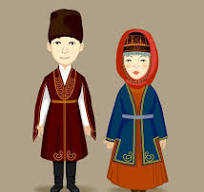
The pride in Armenian culture is demonstrated in the preservation of the traditional and national dress, called Taraz. While not worn every day, the Taraz is commonly worn for cultural festivals, special celebrations, and folk dances. With the historical divide between the Eastern and Western parts of Armenia, the Taraz has variations based on the region and has distinct styles for men and women. Women’s Taraz, called the Arkhalig dress or just Arka in some areas, is a long, loose-fitting dress made from silk, satin or velvet. It is often embroidered with decorative designs in gold or silver thread, especially in Western Armenia. An apron called Mezar and a silver belt is also an important element in Western Armenia. The women’s Tazar also usually includes an elaborate headdress that consists of a red cap, tassels, and jewelry. The more adorned the headdress is, the higher class the woman is from. Men’s Taraz includes a shirt, wide pants called Shalvar or Vartik, an outer jacket called Arkhalugh, and another long, loose outer coat called Chukha. A belt is a critical part of men’s attire. A silver belt symbolizes maturity, and a gold belt symbolizes wealth. Men’s Taraz also include headwear called Papakh, a fur hat that varies in size and shape based on the region. Please see image below.
Cuisine
Armenian cuisine is as ancient as Amernian history. It is known for its distinct and flavorful aromas that are pungent due to the heavy use of garlic, fenugreek, cumin, and other fresh herbs along with specific curing methods of the meats. Due to its geographical location and political history of influences from neighboring regions, Armenian food is closely tied to Eastern European and Mediterranean cuisine.
A very iconic item in Armenian cuisine is its traditional bread called Lavash. Lavash was included in the UNESCO Representative List of the Intangible Cultural Heritage of Humanity and has become a cultural expression of Armenian cuisine.
The Amernian soup, Khash, which comes from the Armenian verb, khashel, which means to boil, is a savory broth made from boiling cow’s feet, legs, and sometimes stomach for many hours. It is flavored with garlic, salt, vinegar and is served with Lavash as an early morning, ceremonial meal.
The national fruit of Armenia is apricot. During Roman times, apricot was known as Prunus Armeniaca, which translates to “Armenian Plum.”
Armenia is known for its cognac, which has won several awards worldwide and was one of British Prime Minister Winston Chuchill’s favorite. Armenia is also the birthplace of winemaking. The oldest winery in the world is in Armenia in a place called Areni Village.
Holidays
Armenian holidays and festivals are a combination of Christian and pagan celebrations. This is because Armenia was a pagan country before it adopted Christianity in the fourth century AD. Most current day holidays are Christian, but there are still some festivals like Vardavar that comes from Pagan times, in honor of Goddess Astghik. During Vardavar, people play with water and spray it one another. This spraying is meant to be a symbol for purification, renewed health and joy.
The most prevalent Christian holiday in Armenia is of course Christmas, but this is celebrated on January 6th instead of December 25th. For Christmas, Armenians attend church and then gather with friends and family over a meal of rice pilaf and fish.
Other non-religious holidays that are popular in Armenia include Children’s Day and Independence Day. Children’s Day is celebrated on June 1st annually, with several events, games and gifts for kids. Amusement parks offer free entry to all kids, and the whole day is filled with fun. Independence Day is celebrated on September 21st to commemorate when Armenia got its independence from the former Soviet Union in 1991. This day is marked and celebrated with cultural events and fireworks.
Business Culture
Like many other aspects of Armenian ways of living and culture, business culture in Armenia has drawn its influence from the Soviet power, its neighboring Eastern European countries, as well as the west and is now a medley of all three. It is formal and driven by hierarchy but relies heavily on established relationships and trust. Trust is critical and requires times and a lot of in-person meetings and interaction. Hospitality is a big part of business meetings and include warm meals and toasts. Decisions are generally made by the leaders and can be caught up in red tape and be slow to filter down. Meetings are not on time, and it is common for the hosts to be a little late. Business communications are generally polite, and Armenians refrain from saying a direct “No.” This can cause negotiations and decisions to be slow.
References
Vardanyan, Aram. (2025, July 28). “Armenian Culture: Things to Know – Traditions, Heritage, and Modern Life!” Absolute Armenia. Armenian Culture: Things to Know – Traditions, Heritage, and Modern Life! – Absolute Armenia
Dinolingo. (2010-2026). “Welcome To Armenia: A Tiny Country With A Big Heart” Welcome to Armenia: A Tiny Country with a Big Heart – Language Lessons For Kids
Countries and their Cultures (Copyright 2008) “Armenia”. Culture of Armenia – history, people, women, beliefs, food, customs, family, social, marriage
Wikipedia. (2026). “Culture of Armenia”. Culture of Armenia – Wikipedia