Located in southern Africa, Botswana shares borders with South Africa, Namibia, Zambia, and Zimbabwe. A large part of the country is covered by the Kalahari Desert, giving Botswana a landscape that is very different from the lush forests and jungles many people picture when they think of Africa. But one of the country’s most amazing natural features is the Okavango Delta, where a river flowing out of Angola flows through the desert, creating wetlands that support a huge variety of wildlife. The capital city of Botswana is Gaborone. It is in the southeastern part of the country near the South African border.
Botswana’s modern history is a little unusual compared to many African nations. When the country gained independence from Britain in 1966, it was one of the poorest countries in the world. Since then, it has developed as one of Africa’s most stable democracies and has experienced significant economic growth through diamond mining and careful management of natural resources.
The culture of Botswana is heavily influenced by the Tswana people, who make up most of the population. The country’s name, Botswana, means “land of the Tswana,” and many of the customs, values, and traditions found throughout the country have their roots in Tswana culture.
One of the most defining aspects of Tswana culture and community is their belief in Equal Voice. The Tswana people have traditionally had a community council and public court, called the kgotla, as a form of government. The Kgotla is a physical space in the center of the village where the community members gather under a large tree. Led by a village chief, known as Kgosi, the community used this space to discuss rules and policies, solve any local disputes and make collective decisions through open conversation. Every adult member of the community is allowed to freely express their thoughts and opinions and is considered to have equal weight, regardless of whether they were a man or a woman. Eventough Botswana is now a modern nation, the kgotla tradition continues today and remains an important part of civic life.
Family Life
Family relationships are highly valued in Botswana as they are in most other parts of the world. Children are commonly raised with the support of grandparents, aunts, uncles, and other relatives. Respect for elders is emphasized from a young age, and older family members are looked up to for guidance and advice.
Throughout Botswana, there is a strong belief that individual success should contribute to the well-being of the larger community. This sense of responsibility to family and neighbors remains an important cultural value. An interesting point on community wealth is that it was traditionally measured in cattle. To make sure that no one fell into poverty, wealthy individuals would lend their cattle to poorer neighbors and share their wealth. The neighbors then used the cattle for milk and farming, turning individual wealth into a tool to elevate the whole community.
Today, this communal support is still practiced in the form of social obligation where successful family members financially support the education, healthcare, and well-being of extended family members ensuring that one person’s success lifts the entire community.
Language
English is the official language of Botswana and is used in government, education, and business. However, Setswana is the language most spoken in everyday life and serves as an important part of national identity. Many people switch easily between English and Setswana. Several other languages are also spoken throughout the country, particularly among different ethnic communities. Botswana is also home to indigenous minority groups like the San Bushmen, who speak languages with include clicking sounds, which are some of the most complex sound systems in the world. This linguistic diversity reflects the variety of cultures that have contributed to Botswana’s history.
Dress
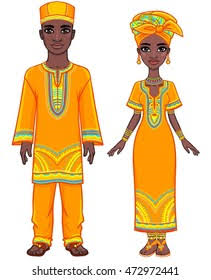
For everyday activities, people in Botswana generally wear modern clothing like what is worn in many other parts of the world. But, traditional clothing is still common during weddings, cultural celebrations, and national events. One of the most recognizable fabrics is known as leteisi, a brightly patterned cotton material that is often worn by women as dresses, skirts, or shawls. Matching outfits made from leteisi fabric are commonly seen during family celebrations and community gatherings. Please see image below.
Cuisine
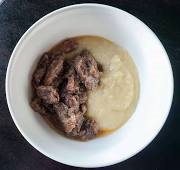
Botswana’s cuisine reflects both the country’s environment and its agricultural traditions. A staple food throughout the country is pap, a thick porridge made from maize meal that is served with meat, beans, or vegetables. Beef is important in Botswana and is considered some of the highest-quality beef exported from Africa. The national dish of Botswana is called Seswaa. See an image of Seswaa below. It consists of beef that has been slowly cooked until tender and then shredded. The starch from the cooked meat is served over the pap. It is commonly served during weddings, holidays, and community celebrations. Because Botswana mostly has dry climate, meals have focus on ingredients that can be grown or raised locally. As a result, sorghum, maize, beans, and beef play a central role in the national diet.
Festivals and Traditions
Botswana’s cultural traditions are closely connected to music, dance, and storytelling. Traditional dances are performed during celebrations and community events. These performances are more than entertainment; they are a way of preserving history and passing cultural knowledge from one generation to the next.
One of the country’s best-known cultural events is the Dithubaruba Cultural Festival, where communities gather to showcase traditional music, dance, crafts, and food. During the Dithubaruba Cultural Festival, a ritual food called mokoto (meat from a cow’s backbone) is specifically reserved for men to eat alone, while women eat a separate cut of meat called ngati.
Another interesting aspect of Botswana is the importance of cattle in traditional society. Historically, cattle represented not only wealth but also social status and family security. Even today, cattle continue to hold cultural significance beyond their economic value.
Business Culture
Botswana is often viewed as one of the most business-friendly countries in Africa. Professional interactions tend to be courteous and straightforward. Business discussions are usually more direct than in some neighboring countries. Decision-making may take time, particularly when multiple groups are involved. This is because of the broader cultural tradition of discussion that can be traced back to the kgotla system.
References
Britannica. “Botswana.” https://www.britannica.com/place/Botswana
Countries and their Cultures (Copyright 2008). “Botswana.” https://www.everyculture.com/A-Bo/Botswana.html
Botswana Tourism Organisation. “Culture and Heritage.” https://www.botswanatourism.co.bw
World Travel Guide. “Botswana History, Language and Culture.” https://www.worldtravelguide.net/guides/africa/botswana/history-language-culture/
Wikipedia. (2026). “Culture of Botswana.” https://en.wikipedia.org/wiki/Culture_of_Botswana.