Located in the continent of South America, Bolivia is bordered by Brazil, Paraguay, Argentina, Chile, and Peru. It is one of only two landlocked countries on the continent, sharing no borders with a body of water. It is known for its diverse geography. Bolivia consists of the Andes Mountains, high-altitude plateaus, tropical rainforests, and a large salt flats. La Paz is Bolivia’s political capital and is home to the country’s president, congress and most other government officials. It is situated at an elevation of over 11,000 feet and is considered one of the highest capital cities in the world. The city of Sucre is named in the country’s constitution as the legislative capital. This is where the Supreme Court of Justice resides.
Bolivia stands out from many other countries in South America because of the strength of its Indigenous heritage. Before the arrival of the Spanish, the region was home to several Indigenous civilizations, including the Tiwanaku civilization and later the Inca Empire. Spanish colonization began in the sixteenth century and lasted for close to three hundred years. Although Bolivia gained independence in 1825, Indigenous traditions, languages, and customs remained deeply rooted in their society. Today, Bolivia has one of the largest Indigenous populations, and Indigenous culture plays an important role in everyday life. Bolivia officially recognizes dozens of Indigenous languages along with Spanish. This reflects the country’s belief that its cultural diversity is one of its greatest strengths rather than something that should be replaced by a single national culture and language.
Family Life
Family relationships are very close in Bolivia, but in many rural communities, the idea of family extends beyond the parents and children into a wider community of extended family, friends and neighbors. Neighbors always help each other during harvests, celebrations, and important life events. This sense of collective support is especially strong in Indigenous communities, where traditions emphasizing collaboration have been practiced for centuries.
Marriage is usually based on personal choice today, although family involvement remains very important. Weddings are major celebrations that combine religious traditions, music, dancing, and large gatherings with friends and family. An interesting tradition in rural and indigenous Bolivian communities with regards to marriage is Siruinaku, a trial marriage where couples live together for up to 3 years before officially getting married to make sure they are compatible. Another interesting tradition is that wedding receptions often feature ribbons baked inside the wedding cake. The bride’s single friends pull a ribbon out, and the one who gets a hidden ring is predicted to be next to get married, like the culture of bouquet throwing in America.
Language
Spanish is the most widely spoken language in Bolivia, but it is definitely not the country’s only language. Bolivia officially recognizes more than thirty Indigenous languages. The most commonly spoken Indigenous languages are Quechua, Aymara, and Guaraní. In some parts of the country, it is common for children to grow up speaking an Indigenous language at home and learn Spanish in school. Language is closely tied to cultural identity in Bolivia. Efforts to preserve Indigenous languages have become an important part of maintaining the traditions and history of the country’s many ethnic groups.
Dress
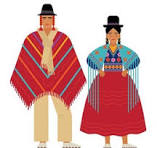
One of the most recognizable parts of Bolivia is the traditional clothing still worn by many Indigenous women and men, especially in and around the Andes mountains. Women known as cholitas wear layered skirts called polleras, colorful shawls, and distinct bowler hats. The bowler hat was actually originally introduced by Europeans during the nineteenth century but was later adopted into the Indigenous way of dressing and eventually became a symbol of Bolivian identity.
Traditional clothing remains common in many towns and cities, especially among Indigenous communities. Unlike in some countries where traditional dress is only worn during festivals, it is common to see people wearing traditional clothing in every day life while, working, at home, or traveling in Bolivia. Please see below for an image of Bolivian traditional wear.
Cuisine
Bolivian cuisine varies significantly depending on the part of the country you are in. In the highlands, meals include potatoes, corn, quinoa, and meat. In the tropical lowlands, dishes often include rice, fruits, and locally grown vegetables.
Potatoes hold an important place in Bolivian cooking. Interestingly, the Andes region of Bolivia and Peru are considered some of the original homes for potatoes, and hundreds of varieties are still grown there today.
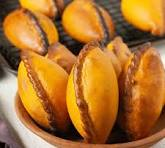
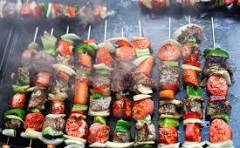
One popular dish is salteñas, which are baked pastries filled with meat and vegetables. It is served with a sweet, savory sauce. Another common food is anticuchos, grilled meat skewers sold by street vendors. See below for images of salteñas and anticuchos. Quinoa, which is now popular around the world, was originally produced in Bolivia and has been eaten for thousands of years.
Festivals and Traditions
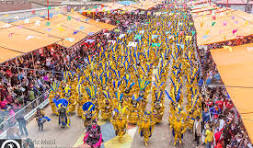
If there is one celebration that captures the energy and cultural richness of Bolivia, it is the Carnaval de Oruro. Held each year in the city of Oruro, this festival combines Indigenous beliefs with Catholic traditions and includes elaborate costumes, music, and thousands of dancers. UNESCO recognized this festival as part of the world’s cultural heritage. See below for the color and scale that is seen in the Carnaval de Oruro.
Dance plays an important role in many Bolivian celebrations. Traditional dances are used to tell stories about history, religion, and local legends. One of the most famous is the Diablada, or Dance of the Devils, which features elaborate masks and colorful costumes.
Business Culture
Business culture in Bolivia places a lot more value on personal relationships than some of its neighboring countries. People generally prefer to get to know each other before discussing any major business matters, and trust is developed through repeated meetings over a long period of time. Meetings usually begin with informal conversations about family, travel or other personal events before moving into a formal discussion. So, business deals in Bolivia can take longer than what is customary in the U.S.
Business organizations are pretty hierarchical, and important decisions are frequently made by senior leaders. Professional dress is expected in most business settings, particularly in larger cities like La Paz, Santa Cruz, and Cochabamba.
References
Britannica. Bolivia. https://www.britannica.com/place/Bolivia
Countries and their Cultures (Copyright 2008). Bolivia. https://www.everyculture.com/A-Bo/Bolivia.html
UNESCO. Carnival of Oruro. https://ich.unesco.org
World Travel Guide. Bolivia History, Language and Culture. https://www.worldtravelguide.net
Wikipedia. Culture of Bolivia. https://en.wikipedia.org/wiki/Culture_of_Bolivia