Brazil occupies nearly half of South America and is the largest country in the continent. From the Amazon rainforest in the north to the beaches of Rio de Janeiro and the grasslands of the south, the country’s geography is as diverse as its people. Brazil is also the world’s largest Portuguese-speaking nation, which is surprising since it is surrounded mostly by Spanish-speaking countries. Portuguese became the national language because Brazil was colonized by Portugal rather than Spain.
What makes Brazil really interesting is that its culture emerged from the blending of Indigenous communities, Portuguese settlers, Africans brought through the transatlantic slave trade, and later waves of immigrants from Italy, Germany, Japan, Lebanon, and many other countries. Today, that mixture can be seen in the language, the music, the food, and many other parts of Brazilian everyday life.
One concept that often appears when people talk about Brazil is alegria, or joy. Whether watching a neighborhood soccer match, attending a local festival, or simply gathering with family on a weekend, there is often an emphasis on enjoying life and spending time with others. An interesting fact about alegria is that it was born out of a form of political resistance. During the country’s oppressive military dictatorship in the 1960s, a big cultural movement called Tropicalia was started. This movement’s unofficial anthem was a catchy song released in 1967 by Caetano Veloso called “Alegria, Alegria.” While the government was trying to enforce and fear and obedience, Brazilian youth fought back with radical joy, bright colors, and celebratory music. The rebellion later became part of Brazilian culture and way of living, where the Brazilian people consider it very important to enjoy life to the fullest and value joy in everyday gatherings and activities.
Family Life
Brazilian families tend to be close-knit. Relatives usually remain involved in one another’s lives into adulthood and old age, and family gatherings are an important part of social life. In Brazil, family usually comes before careers. Relatives rely on each other for financial, emotional, and social support. Young adults usually live with their parents until they get married or finish their education. Grandparents and older relatives are deeply respected. They often live with younger generations. Relatives show love openly through frequent hugging, kissing, and calling each other throughout the day. Brazilians kiss each other three times on the cheek as a common form of greeting.
Language
Portuguese is the official language and one of the strongest symbols of Brazilian identity. Although it has similarities when compared to European Portuguese, Brazilian Portuguese has developed its own accent, expressions, and vocabulary over time.
Cuisine
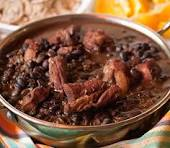
Food in Brazil changes dramatically depending on where you are. In the south, barbecue known as churrasco is popular. Along the coast, seafood is common. In the Amazon region, local fruits and fish make up most dishes. One meal found throughout the country is feijoada, a hearty stew traditionally made with beans and pork. See below for an image of feijoada. Brazil is also one of the world’s largest coffee producers, and coffee is a big part of everyday life.
Festivals and Traditions
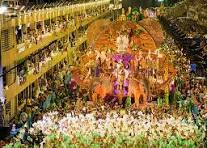
No summary of Brazil is complete without mentioning Carnival. Held before Lent, Carnival transforms the entire country with elaborate costumes, music, dancing, and parades. Rio de Janeiro’s Carnival is the most famous, but celebrations take place across the country. Samba music, one of Brazil’s best-known cultural music styles, is at the heart of many of these festivities and is heard in the streets through out Carnival season. See the image below for Carnival in Rio.
Soccer is another major cultural force in Brazil. For many Brazilians, it is way more than a sport. Local teams and national competitions inspire tremendous enthusiasm and community pride and a huge part of the country’s culture and identity.
Business Culture
Brazilian business culture tends to place a lot of importance on relationships. People feel like they have to know those they work with before getting into any form of formal business. Conversations even at work may be energetic and personal, and meetings often include discussion beyond the specific business topic. While professionalism is important, Brazilian people are known for being loud, energetic, and their love of life. This translates into the way business is done in the country as well.
References
Britannica. “Brazil.” https://www.britannica.com/place/Brazil
UNESCO. “Cultural Diversity in Brazil.” https://en.unesco.org/creativity/governance/cultural-diversity
Countries and their Cultures (Copyright 2008). “Brazil.” https://www.everyculture.com/Bo-Co/Brazil.html
Wikipedia. (2026). “Culture of Brazil.” https://en.wikipedia.org/wiki/Culture_of_Brazil.