I have to admit that I never heard of Burkina Faso before starting this research. But after learning more about the country, I discovered that it is one of the most culturally rich and artistically vibrant countries in West Africa.
Burkina Faso is bordered by Mali, Niger, Benin, Togo, Ghana, and Côte d’Ivoire. Burkina Faso is pretty simple in its terrain and is primarily made up of savannas and open countryside unlike its neighbors that have dramatic differences in their landscape. The capital city is called Ouagadougou. The country’s name is interesting. Burkina Faso means “Land of Upright People” or “Land of Honest People.” The name was adopted in 1984 and combines words from two different local languages. It reflects values of integrity, dignity, and pride that many Burkinabè people associate with their national identity.
Burkina Faso has a huge amount of ethnic diversity. More than sixty ethnic groups live there, each with their own language, customs, music, and traditions. Rather than one dominant cultural identity, Burkina Faso is more like a collection of cultures and many different communities.
Family Life
In many villages, life revolves around the broader community rather than just the immediate family. Births, weddings, harvests, and other important events often become celebrations involving large numbers of relatives, neighbors, and friends. Because communities have different ethnic groups, Burkina Faso has this old custom, where different ethnic groups are paired together and are allowed and even expected to spew out wild insults at each other in public. But no one takes offense. The custom might look like an aggressive altercation but it is a traditional tool designed to diffuse tension, arguments and foster unity across all the many ethnic groups in the country.
Language
French is the official language of Burkina Faso and is used in government, education, and business. But, daily life is usually done in local languages. The most widely spoken is Mooré, the language of the Mossi people, who make up the country’s largest ethnic group. Other commonly spoken languages include Dioula and Fulfulde.
A famous and quirky cultural feature of Bulgarian communication in Bulgaria is that nodding your head up and down means “no,” while shaking your head side-to-side means “yes.” This is the exact opposite of what we are used to in the United States
Art, Masks, and Storytelling
Burkina Faso is known for its artistic traditions. Many ethnic groups throughout the country create elaborate wooden masks that play important roles in ceremonies and celebrations. These masks are not just decorative objects. They represent animals, spirits, ancestors, or important cultural beliefs. Storytelling is also very important among ethnic groups. Long before books became available, history, lessons, and community values were passed down through generations via stories. This oral tradition remains an important part of cultural life even today.
Burkina Faso is also home to FESPACO, the Pan-African Film and Television Festival of Ouagadougou. It is the largest African film festival and attracts filmmakers from across Africa and around the world.
Dress
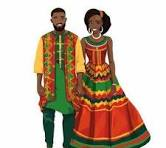
Traditional clothing is made using locally woven cotton and incorporate bright colors and intricate patterns. Women wear long dresses and head wraps, while men may wear flowing robes known in many parts of West Africa. See image of the traditional clothing in Burkina Faso.
Cuisine
The cuisine of Burkina Faso incorporates Sorghum, millet, maize, rice, and peanuts because these can grown well in the country’s climate
One of the country’s most popular foods is tô, a thick dough-like dish made from millet, sorghum, or corn flour. It is served with sauces made from vegetables, peanuts, or okra. Street food is also popular. In markets throughout the country, vendors sell grilled meat, fried snacks, and seasonal fruits.
Festivals and Celebrations
Music and dance are an important part of many celebrations in Burkina Faso. Drumming accompanies festivals, weddings, and community gatherings. Different rhythms and dances can have different meanings and are usually tied to specific ethnic traditions. The country hosts several cultural festivals throughout the year that celebrate music, crafts, storytelling, and film. These events provide opportunities for younger generations to learn about traditions that have been passed down for centuries.
Business Culture
Greetings are important and take longer than what people in the United States are used to. Taking the time to ask about someone’s family, health, and well-being is regarded as a sign of courtesy rather than small talk. Even business meetings generally start with personal and meaningful conversation.
References
Britannica. “Burkina Faso.” https://www.britannica.com/place/Burkina-Faso
Countries and their Cultures (Copyright 2008). “Burkina Faso.” https://www.everyculture.com/Bo-Co/Burkina-Faso.html
FESPACO. “Pan-African Film and Television Festival of Ouagadougou.” https://fespaco.org
World Travel Guide. “Burkina Faso History, Language and Culture.” https://www.worldtravelguide.net/guides/africa/burkina-faso/history-language-culture/
Wikipedia. (2026). “Culture of Burkina Faso.” https://en.wikipedia.org/wiki/Culture_of_Burkina_Faso